ThreadLocal
ThreadLocal.set
/**
 * Sets the current thread's copy of this thread-local variable
 * to the specified value.  Most subclasses will have no need to
 * override this method, relying solely on the {@link #initialValue}
 * method to set the values of thread-locals.
 *
 * @param value the value to be stored in the current thread's copy of
 *        this thread-local.
 */
public void set(T value) {
    Thread t = Thread.currentThread();
    ThreadLocalMap map = getMap(t);
    if (map != null)
        map.set(this, value);
    else
        createMap(t, value);
ThreadLocal.getMap
/**
 * Get the map associated with a ThreadLocal. Overridden in
 * InheritableThreadLocal.
 *
 * @param  t the current thread
 * @return the map
 */
ThreadLocalMap getMap(Thread t) {
    return t.threadLocals;
}
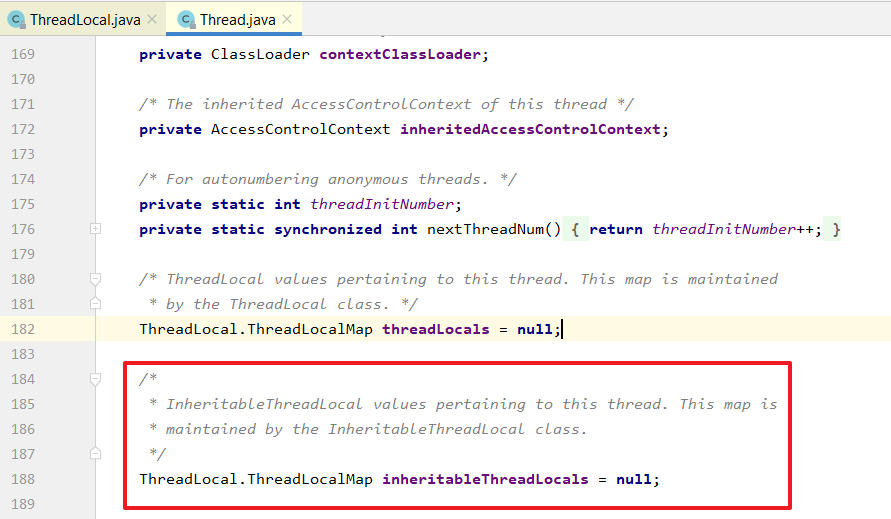
每一个线程有一个ThreadLocalMap
ThreadLocal.set
/**
 * Set the value associated with key.
 *
 * @param key the thread local object
 * @param value the value to be set
 */
private void set(ThreadLocal<?> key, Object value) {

    // We don't use a fast path as with get() because it is at
    // least as common to use set() to create new entries as
    // it is to replace existing ones, in which case, a fast
    // path would fail more often than not.

    Entry[] tab = table;
    int len = tab.length;
    int i = key.threadLocalHashCode & (len-1);

    for (Entry e = tab[i];
         e != null;
         e = tab[i = nextIndex(i, len)]) {
        ThreadLocal<?> k = e.get();

        if (k == key) {
            e.value = value;
            return;
        }

        if (k == null) {
            replaceStaleEntry(key, value, i);
            return;
        }
    }

    tab[i] = new Entry(key, value);
    int sz = ++size;
    if (!cleanSomeSlots(i, sz) && sz >= threshold)
        rehash();
}
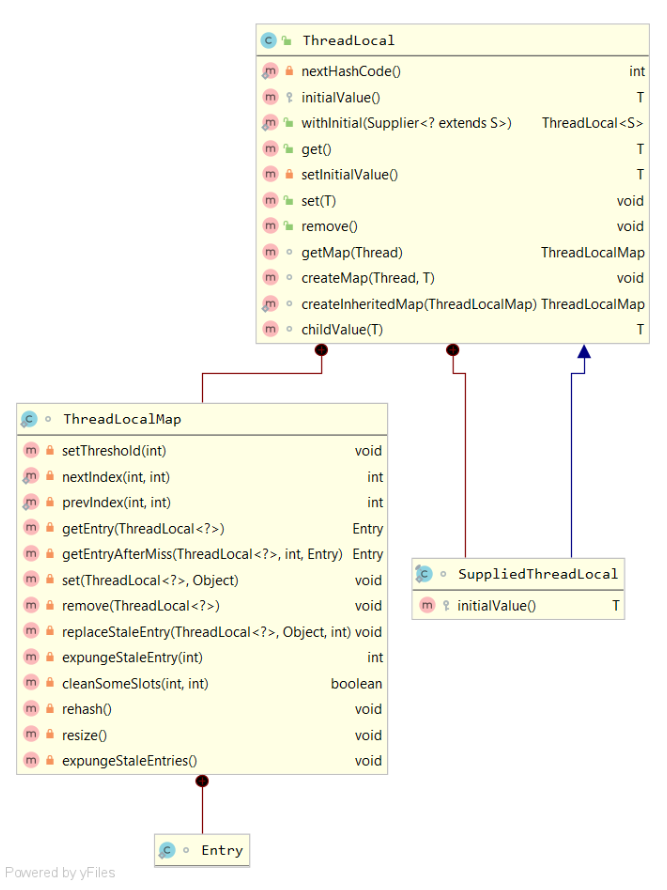
ThreadLocal.ThreadLocalMap.Entry
/**
 * The entries in this hash map extend WeakReference, using
 * its main ref field as the key (which is always a
 * ThreadLocal object).  Note that null keys (i.e. entry.get()
 * == null) mean that the key is no longer referenced, so the
 * entry can be expunged from table.  Such entries are referred to
 * as "stale entries" in the code that follows.
 */
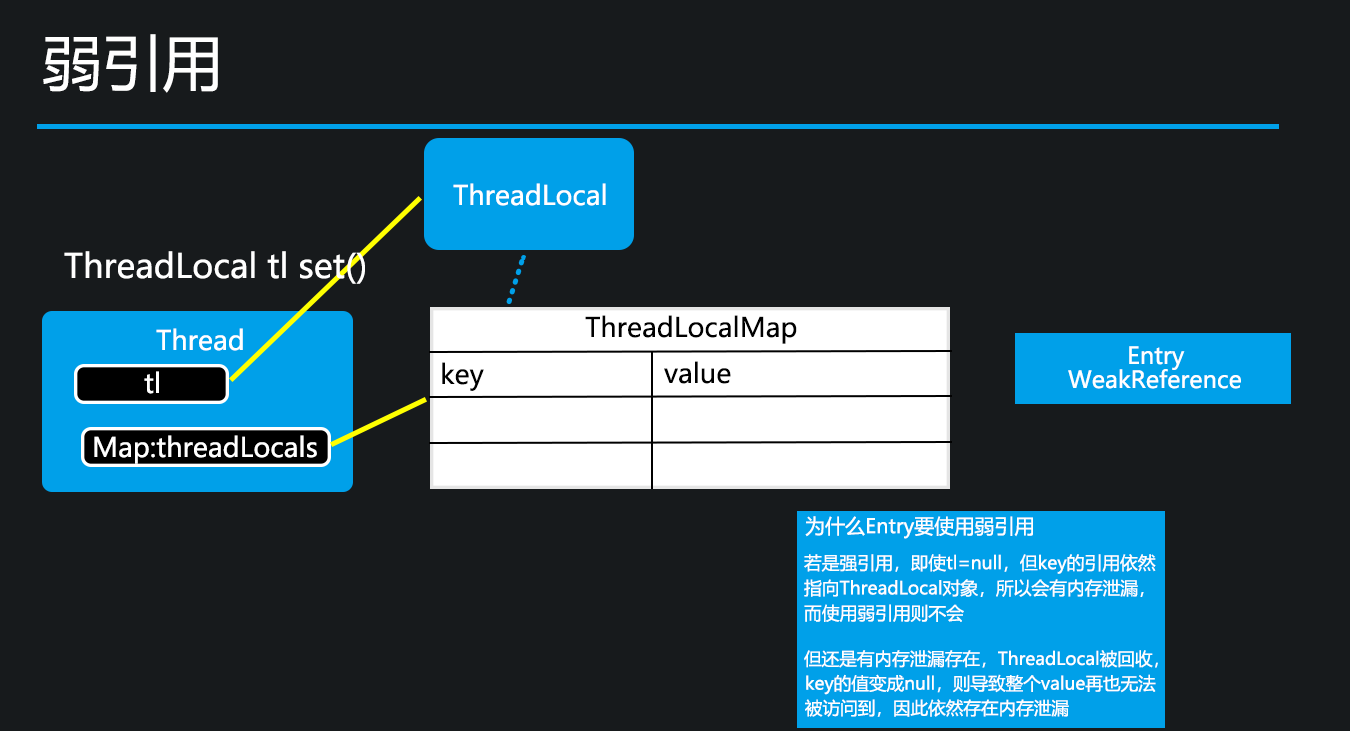
static class Entry extends WeakReference<ThreadLocal<?>> {
    /** The value associated with this ThreadLocal. */
    Object value;

   Entry(ThreadLocal<?> k, Object v) {
       super(k);
       value = v;
  }
}
ThreadLocal.remove
/**
 * Removes the current thread's value for this thread-local
 * variable.  If this thread-local variable is subsequently
 * {@linkplain #get read} by the current thread, its value will be
 * reinitialized by invoking its {@link #initialValue} method,
 * unless its value is {@linkplain #set set} by the current thread
 * in the interim.  This may result in multiple invocations of the
 * {@code initialValue} method in the current thread.
 *
 * @since 1.5
 */
 public void remove() {
     ThreadLocalMap m = getMap(Thread.currentThread());
     if (m != null)
         m.remove(this);
}
ThreadLocalMap.remove
/**
         * Remove the entry for key.
         */
        private void remove(ThreadLocal<?> key) {
            Entry[] tab = table;
            int len = tab.length;
            int i = key.threadLocalHashCode & (len-1);
            for (Entry e = tab[i];
                 e != null;
                 e = tab[i = nextIndex(i, len)]) {
                if (e.get() == key) {
                    e.clear();
                    expungeStaleEntry(i);
                    return;
                }
            }
        }
Entry.clear
/**
     * Clears this reference object.  Invoking this method will not cause this
     * object to be enqueued.
     *
     * <p> This method is invoked only by Java code; when the garbage collector
     * clears references it does so directly, without invoking this method.
     */
    public void clear() {
        this.referent = null;
    }
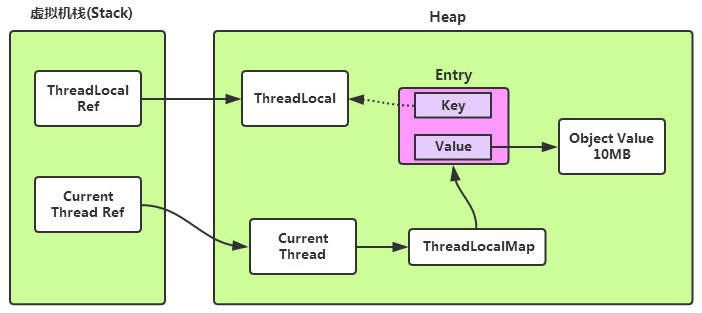
threadlocal用完后要记得remove掉那个Entry,否则还是会造成内存泄漏。